Chemical Kinetics & Combustion
Developing efficient kinetic mechanisms for fuel combustion and pollutant prediction
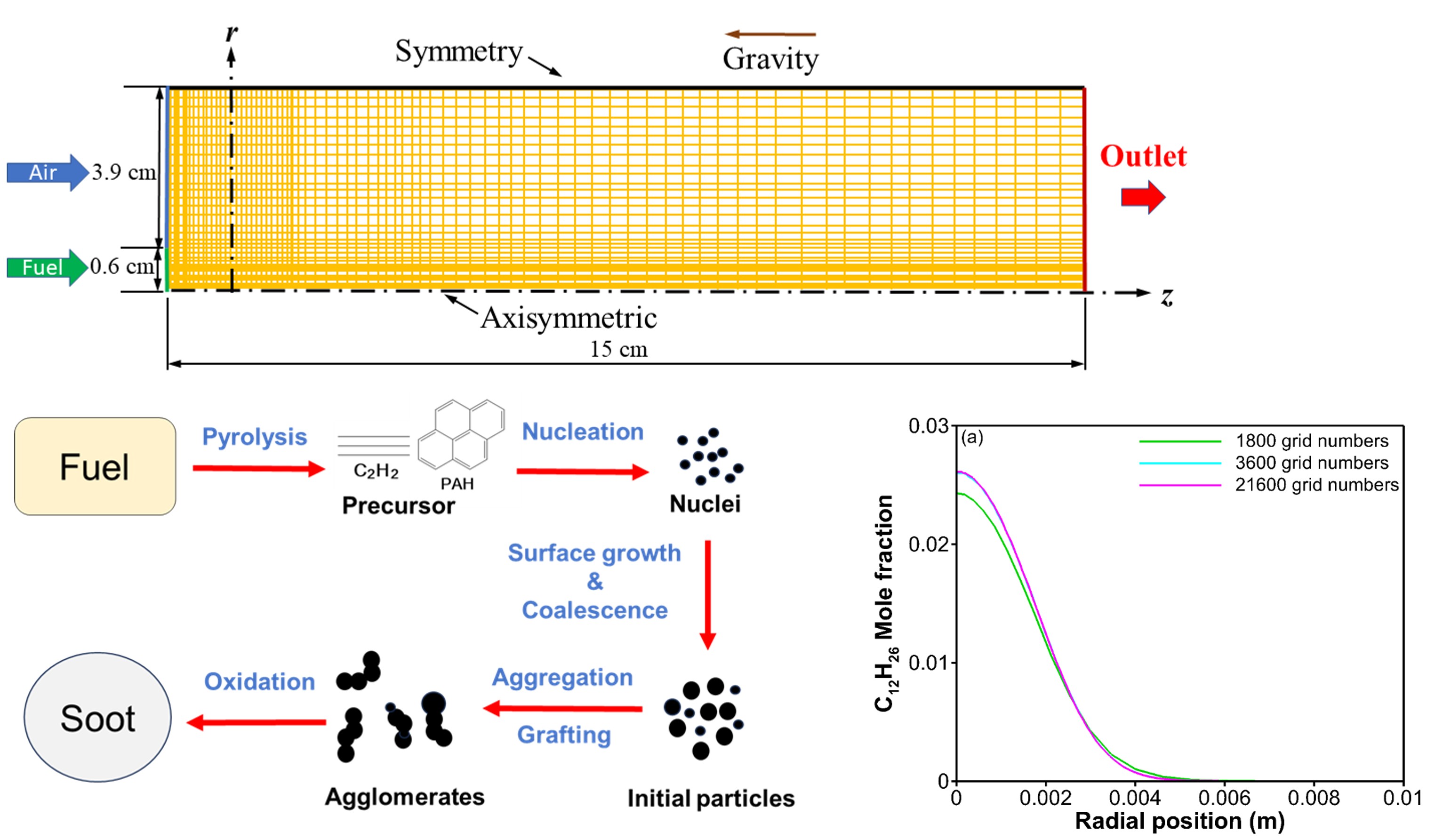
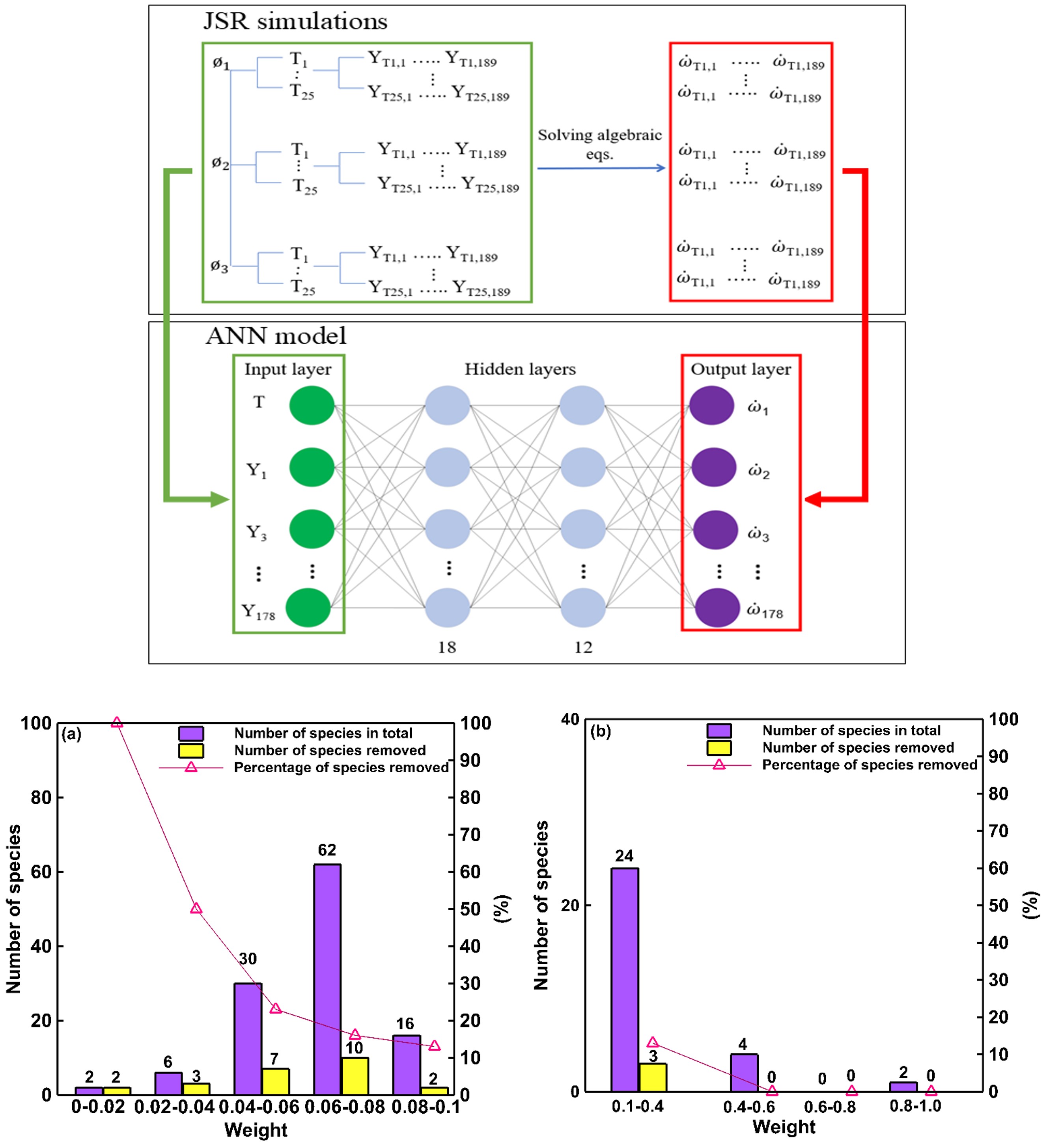
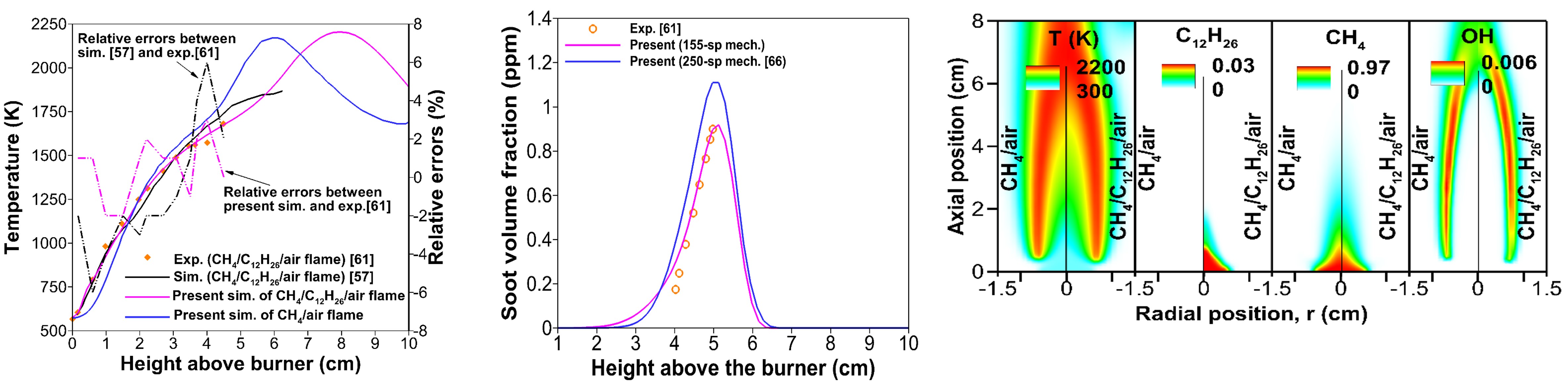
n-Dodecane Kinetic Mechanism & Soot Formation Prediction
Development and validation of compact chemical kinetic mechanisms for n-dodecane combustion using machine learning techniques. This research combines artificial neural networks with traditional path flux analysis to create efficient models that predict soot formation and aromatic species in diesel and jet fuel surrogates.
Key Achievements
- 155-species mechanism with 5.5× computational speedup
- Extended prediction from 5 to 16 aromatic species
- Validated against experimental ignition delay and flame speed data
- Coupled with CFD for spatial pollutant distribution analysis
- Reaction pathway analysis revealing PAH formation routes
Thermal Management Systems
Optimizing microchannel heat sinks for high-performance cooling applications


Microchannel Heat Sink with Optimized Manifold Designs
CFD and experimental investigation of microchannel heat sinks with three manifold configurations: Rectangular, Rectangle with Semi-Circular, and Divergent-Convergent designs. Research focuses on maximizing heat transfer while minimizing pressure drop for electronics cooling applications.
Research Highlights
- Divergent-Convergent design showed 10% higher heat transfer coefficient
- Tested across Reynolds numbers 342-857 with varying heat inputs (50-125W)
- Optimized channel geometry: 500μm width, 3mm depth
- Enhanced Nusselt number with improved flow distribution
- Applicable to automotive, aerospace, and electronics cooling
Interested in Collaboration?
Contact us to discuss research opportunities and partnerships
Get in Touch